
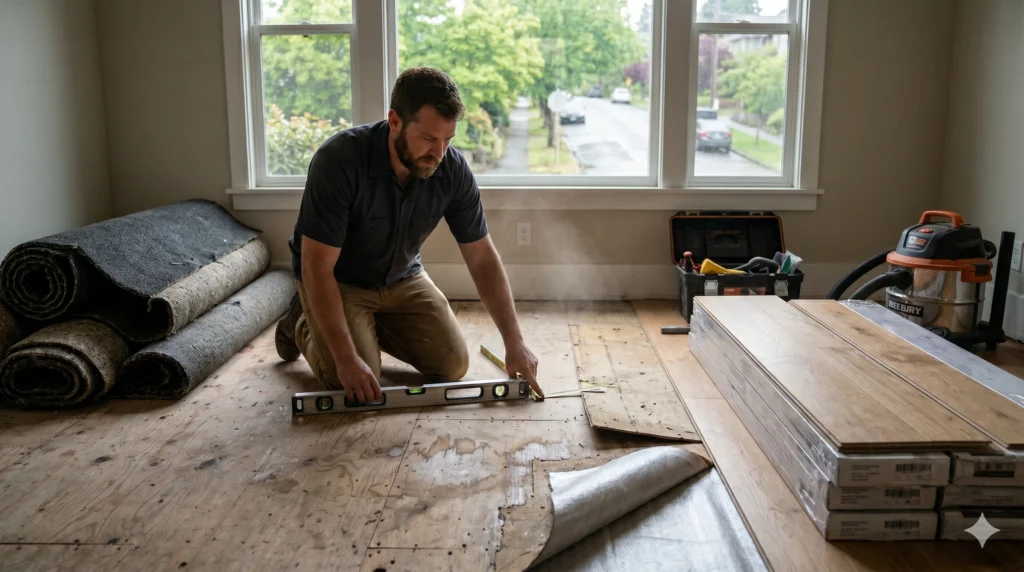
Flooring installation Seattle homeowners plan for often seems like a final decision. New floors can change the whole mood of a room. But once the old surface comes up, the real story of the house usually starts to show. At BYM Construction, that is often where a simple flooring project turns into a bigger conversation about condition, layout, moisture, and what the home actually needs before a clean installation can happen.
That does not mean every flooring job becomes a major rebuild. It means homeowners usually learn more from their floors than they expected. Uneven surfaces, soft spots, poor transitions, outdated materials, and rushed past repairs tend to show up fast. In Seattle, where moisture, aging housing stock, and layered updates are common, flooring work often becomes the first honest look at the state of the interior.
Floors Usually Expose More Than Surface Wear During Flooring Installation, Seattle Projects
A worn finish is easy to spot. What matters more is what sits below it.
A contractor removing old carpet, laminate, tile, or damaged hardwood flooring is not just clearing the room. That step can expose an uneven subfloor, loose sections, prior water damage, bad patchwork, or signs that earlier renovations were done in pieces rather than as one coordinated plan. For many Seattle homes, that is the moment when a cosmetic update starts to reveal structural or functional issues.
This is one reason most general contractors and flooring specialists do not like giving a final number before they see the existing conditions. The visible floor may suggest one scope, while the exposed subfloor suggests another. In practice, the best next step is to get at least three written estimates, compare quotes, and read online reviews before choosing a contractor.1 Many companies offer free, no-obligation estimates, while others may charge for an on-site visit. That gives homeowners a clearer picture of price, scope, and reputation before they commit.
That early discovery stage is not bad news by default. It is useful information that helps people make informed decisions before they spend money on finish materials that may fail if the base is not right.
Flooring Is Often the First Real Test of the Subfloor
A lot of homes hide subfloor problems for years. Rugs cover soft spots. Furniture masks slope. Squeaks become background noise. Then the old floor comes out, and the condition of the base becomes impossible to ignore.
That matters because new floors perform only as well as the surface below them. If the subfloor moves, dips, swells, or holds moisture, the finished floor can fail earlier than expected. Boards separate. Planks shift. Tile cracks. The carpet wears unevenly. Transitions look sloppy. A good-looking installation can still be short-lived if prep is skipped.
A reliable contractor will inspect the surface before trying to install the next layer. That may include leveling, replacing damaged sections, checking for movement, and making sure the surface is ready for the selected system. This is also where the project size matters. One room may need minor prep. A larger home renovation may reveal related issues across multiple areas. In Seattle, that matters even more because older housing stock often requires additional prep before new flooring can be installed cleanly. The same factors can also affect timing, prep, and whether the next flooring system can be installed without added delays.
Material Choice Says a Lot About How the Home Is Used
A flooring decision is about more than appearance. It also reflects traffic patterns, cleaning expectations, moisture conditions, and whether the choice is genuinely suited to the room.
A family kitchen may call for something very different from a quiet bedroom upstairs. A condo in a downtown setting can bring sound issues into play that a detached home may never have to consider. Rental properties, business spaces, and mixed-use interiors usually come with different priorities than homes meant for long-term personal living, especially when the flooring needs of a business tenant differ from those of a homeowner. Daily function should shape the material choice more than the polished look of a sample piece. For example, a bathroom or entry area may need tile, laminate, or stone that can perform well under moisture and daily traffic.
That is why hardwood, engineered wood, engineered hardwood, solid hardwood, stone, tile, carpet, and laminate should not be treated as though they are all versions of the same answer. Each one involves its own compromise in cost, moisture response, maintenance demands, and long-term return, and hardwood flooring is a good example of how material performance can change from room to room. Hardwood flooring is durable, relatively low-maintenance, and often chosen for its long-term value and appearance. It is also less likely than carpet to trap allergens and moisture-related buildup, which matters in some households. Carpet still appeals in spaces where softness and sound control matter more.
Some clients begin with a simple question: what looks the most upscale? The more useful place to start is often this one instead: what does the floor need to handle over time?
Hardwood Flooring Decisions Can Reveal Whether the Renovation Is Thought Through
Many people are drawn to hardwood flooring because it adds warmth and resale appeal. But hardwood flooring decisions also tend to reveal how carefully the overall project is being approached.
Choosing between solid hardwood and engineered hardwood is not just a design preference. It is a practical one. Solid hardwood can be a strong option in the right part of the home, especially where conditions are stable, and the goal is longevity. Engineered wood may make more sense where moisture swings or installation conditions are less predictable. Maple or other species may also suit one room better than another, depending on wear expectations, stain visibility, and finish goals.
When a client wants hardwood flooring everywhere without considering layout, humidity, subfloor condition, and transition points, that is usually a sign that the larger renovation has not been fully thought through. Good contractors slow that process down. They explain how different materials behave, what prep is needed, where hardwood flooring offers better long-term value, and where a finish like a dark stain may show wear faster than expected. They should also explain basic care, including quick spill cleanup and felt pads under furniture.
This is where quality pros separate themselves from crews that simply show up and start laying flooring.
A Flooring Project Also Reveals How the General Contractor Manages the Work
Flooring is one of the fastest ways to judge whether a general contractor actually runs organized work.
The reason is straightforward. Flooring touches scheduling, prep, surface protection, trim, thresholds, disposal, and sometimes painting or wall touch-up. If the sequencing is sloppy, the problems show quickly. Delays affect the next trade. Dust travels. Fresh surfaces get damaged. Rooms stay unusable longer than they should. It also shows whether the team can communicate clearly, coordinate subcontractors, and keep the site in professional working order from demolition through installation.
This is also where people start learning how general contractors charge and what they are really paying for. General contractors often bill by the hour or by project, and many ask for a down payment before work begins. A licensed, bonded, and insured contractor may cost more, but that usually reflects better supervision, clearer responsibility, and stronger documentation when subcontractors, permits, or changing site conditions complicate the job. Hiring an unlicensed contractor can create quality problems and code risk.2
When you interview general contractors, ask practical questions early. Who handles prep? Who is actually on site during the job? Are they sending employees, subcontractors, or both? If demolition reveals a larger scope, how is that managed? Ask to see photos of similar projects, verify that the company holds a valid state license, and confirm that they carry liability coverage, a surety bond, and workers’ compensation. Those answers usually tell you more than the sales pitch does.
Permits, Insurance, and Scope Matter More Than Most General Contractors Explain
Not every flooring replacement needs the same paperwork. In Seattle, most cosmetic floor replacements in single-family dwellings and many minor interior alterations do not require a permit, but that changes once the work expands into structural repairs, layout changes, or larger renovations.3
That is where a serious company shows its professionalism, especially in how clearly it explains scope, paperwork, and responsibility before the work begins. A licensed team should be able to explain whether permits apply, what their insurance covers, and how the scope affects adjacent work. A reliable contractor should also be clear about warranties, site protection, cleanup, and whether the estimate includes disposal, furniture moving, underlayment, trim, and finish details. Many general contractors do offer warranties, but those terms should be detailed in writing rather than left as a verbal promise.
These are not side issues. They affect cost, risk, and your ability to compare bids honestly. Two proposals may look similar until one includes prep, disposal, and moisture mitigation, while the other only covers visible installation.
That is why Seattle clients should not just focus on the lowest number. They should focus on what is actually included, what the full cost covers, and what quality level they are paying for.
Flooring Work Can Clarify Whether a Bigger Renovation Makes Sense
Sometimes, new floors are all a home needs. Other times, flooring becomes the clue that the work should be approached as part of a broader update.
A patchwork interior with multiple old finishes, worn transitions, wall damage, and uneven rooms often points toward a larger home renovation conversation. Not because every home needs to be gutted, but because piecemeal work can create repeated labor, disruption, and spending.
This is where broader renovation and remodeling services can make more sense than isolated flooring replacement. If the kitchen, hallway, and living area all connect visually, and the walls need repair while the floors are already exposed, it may be smarter to treat the sequence as one coordinated project.
For some households, the real question is not whether to replace the carpet or refinish the hardwood. It is whether the flooring work is exposing a better path for the next phase of the home.
Cost Questions Are Really Scope Questions
Clients often want a fast estimate, but flooring numbers do not mean much on their own. In broad terms, flooring installation costs vary by material, prep, and labor complexity, and they also vary based on layout, access, demolition, and subfloor condition. Midrange flooring installation in Seattle often lands above national averages, and labor alone can vary significantly depending on complexity. Vinyl may fall into a lower range, while hardwood flooring installation can climb much higher depending on the product and the amount of prep involved.
Planning Numbers for Seattle Flooring Projects
For planning purposes, a few rough ranges can help frame the conversation before a site visit and final estimate.
Item | Typical range | What affects it most |
Midrange flooring installation in Seattle | $13–$16 per sq. ft. | Older homes, prep, room layout, material choice |
Vinyl flooring installation | $3–$10 per sq. ft. | Product type, prep level, labor scope |
Hardwood flooring installation | $10–$18 per sq. ft. | Species, plank grade, subfloor prep, layout complexity |
Minor repairs or alterations in Seattle that usually do not need a permit | Up to $6,000 in any 6-month period | Scope, structural impact, fair market value of labor and parts |
The final price can affect decisions about materials, demolition, hauling, room count, trim details, stairs, moisture control, and whether the project stays in one location or moves through connected spaces. These numbers are only rough planning ranges. Actual pricing can shift once demolition, subfloor condition, moisture control, trim details, and furniture moving become part of the scope. A one-room update is not the same as a full-level remodel, and main-floor tile replacement does not behave like upstairs hardwood installation.
That is why good budgeting starts with realistic assumptions. A rough number from the internet can help compare options, but it cannot replace a site visit and a careful scope review. For anyone thinking beyond one room, a whole home renovation budget guide is often a better starting point than guessing from price-per-square-foot averages alone.
The Best Contractors Use Flooring to Protect the Entire Project
A good flooring contractor is not just there to install a finish. The right team uses flooring as a diagnostic point and as part of a broader set of remodeling services.
They notice when the base is weak. They explain where durability matters more than trend. They communicate clearly about schedule, prep, and change orders. They offer a realistic estimate, not an overly clean number that ignores likely issues. They protect adjacent surfaces, manage dust, and leave the site in complete working order, with complete cleanup and no avoidable callbacks left behind. In stronger companies, that level of care reflects a real commitment to the project, not just a rush to finish the visible floor, and that kind of commitment is usually visible long before the last plank goes down. General contractors are also responsible for coordinating the work so the project stays on time when conditions change.
They should also be able to discuss common risk areas without overselling fear. That includes where moisture may affect wood products, when pads or underlayment make sense, how warranties work, and what maintenance to expect once the new floor is in place.
In many cases, the first sign of a strong general contractor is not a polished sales pitch. It is a measured, careful walkthrough that helps the client understand what the project is actually going to involve.
Before You Hire, Look for Clarity, Not Just Confidence From Quality Pros
A lot of people hire flooring professionals by looking at style first and process second. That tends to be the wrong priority.
What matters more at the start is the contractor’s reputation, references, and willingness to explain the scope in clear language. Ask what is actually included in the job. Ask how they handle subfloor prep. Ask what the plan is if hidden damage is found. Ask whether they are licensed, bonded, and insured. Ask who keeps the schedule moving. Ask what the warranties cover, and where those limits stop. If you are still searching for the right fit, pay attention to whether the company sounds careful, realistic, and proud of the work rather than overly polished in the sales conversation. It is also reasonable to ask whether the estimate is free, whether an on-site visit carries a fee, and how clearly the written scope separates labor, materials, and possible repairs.
It is also worth paying attention to how they talk about mistakes. A serious team should be able to explain the usual causes of failure and how they work around them. If you want a better sense of what poor decisions look like in real homes, reviewing common flooring mistakes that make a home look cheap can help sharpen the questions you ask before work begins.
The goal is not just to get attractive floors. It is to protect the larger investment around them.
What the Floor Reveals Is Often the Most Valuable Part
People usually start a flooring project thinking about appearance. But the most important part may be what the floor reveals before the new surface goes in.
It can reveal hidden moisture, old shortcuts, whether the room was prepped correctly, whether past repairs solved the real problem, and whether the next step should stay small or become part of a larger renovation. Done right, that information saves money, protects value, and leads to better work.
For Seattle homeowners, that is the real opportunity. Flooring is not just a finish. It is often the first honest look at how the home is performing underneath the surface. That is also the point where it makes sense to contact a contractor who can explain the location-specific risks, the available services, and the best plan before materials are ordered.
FAQ
What does flooring installation Seattle reveal first?
It often reveals subfloor conditions, moisture issues, uneven surfaces, and signs of earlier patchwork.
Is solid hardwood always better than laminate or engineered wood?
Not always. It depends on the room, moisture exposure, maintenance expectations, and budget.
When should a flooring job become a bigger renovation?
Usually, when exposed conditions show wider issues across connected rooms, walls, or subfloor areas.
Do general contractors handle flooring projects?
Yes, many do, especially when flooring is part of a broader remodeling scope.
Why do general contractors charge more after demolition?
Because hidden damage or prep needs can change labor, materials, and timeline once the old floor is removed.
Should I ask about permits for flooring work?
Yes. Some flooring jobs may not require them, but related structural or remodeling work can.
What should I ask before hiring a contractor?
Ask about licensing, insurance, scope, prep, schedule, warranties, and references.
Is engineered hardwood a good option in Seattle?
In many cases, yes. It can be a practical choice where moisture conditions make stability especially important.