Quality tenant improvement services: flooring, remodeling and construction solutions from BYM Construction
When you’re planning a buildout for your new office space in Bellevue or renovating a retail location in Capitol Hill, flooring decisions directly affect your project timeline and budget. The greater Seattle commercial market showed renewed strength in 2024, with leasing activity averaging 2.1 million square feet per quarter according to Kidder Mathews market data. Flooring represents one of the most significant line items in tenant improvement budgets, often consuming 25-35% of total buildout costs.
The Pacific Northwest climate creates specific challenges you won’t face in drier markets. Seattle averages 150 days with measurable precipitation each year per National Weather Service data. Whether you’re working with a ground-floor retail space near Pike Place Market or converting a basement level in Pioneer Square, your flooring choice needs to handle constant moisture without warping, buckling, or developing mold.
This guide covers flooring and remodeling options for commercial tenant improvements, from luxury vinyl that survives heavy foot traffic to specialized tile work for commercial kitchens. We’ll discuss what performs well in Seattle’s climate, what fits different budgets, and how to prevent the mistakes that derail straightforward TI projects.
Understanding tenant improvements in Seattle's commercial spaces
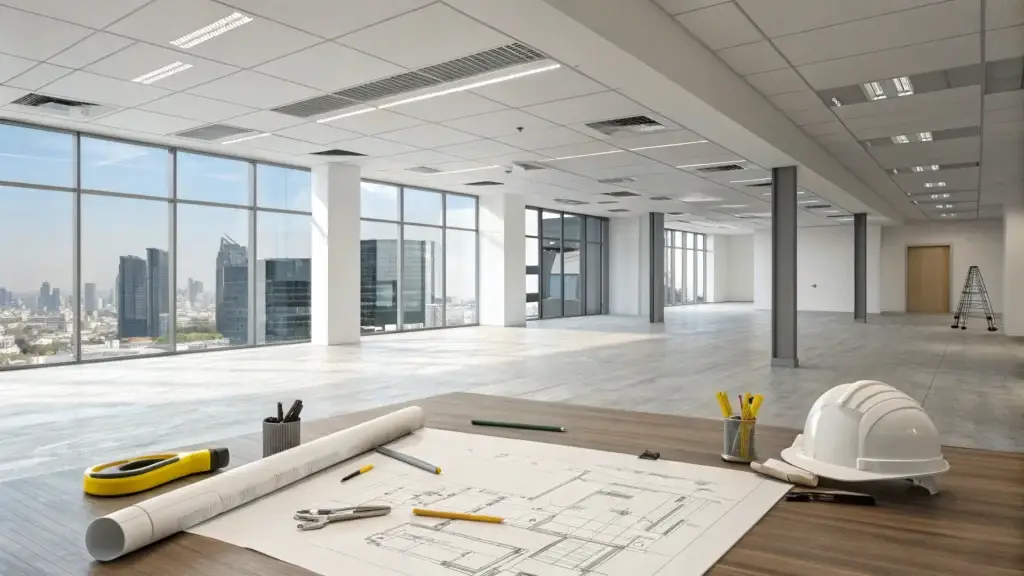
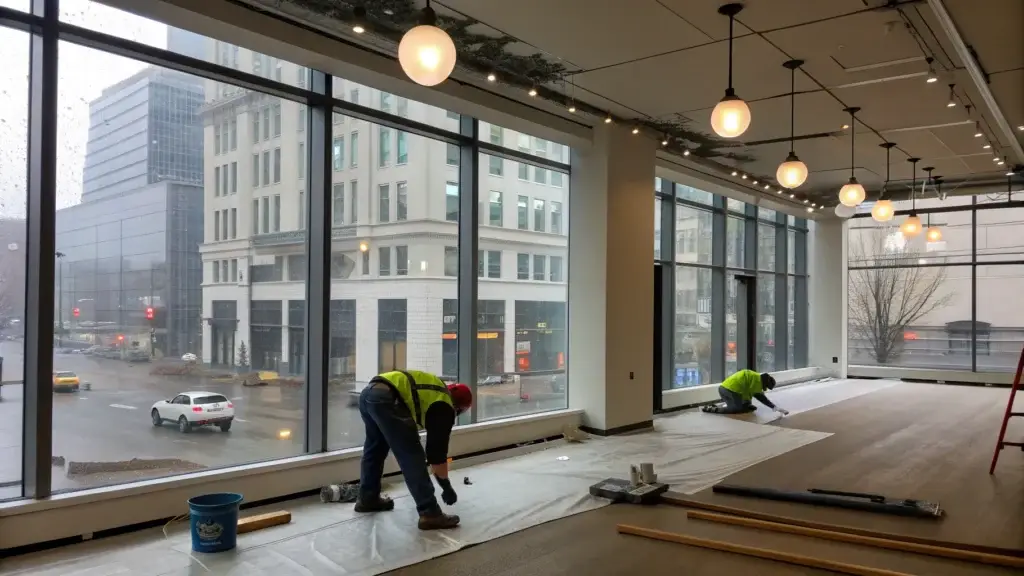
A tenant improvement includes any modification you make to leased commercial space to suit your business needs. Tenant improvements (TIs) are modifications made to a commercial leased space to suit a tenant’s specific needs. In Seattle, this typically covers flooring, lighting upgrades, interior walls, HVAC modifications, and ADA compliance requirements. Your lease agreement spells out what you can change, what requires landlord approval, and who covers the costs.
Most commercial leases in the greater Seattle area include a TI allowance: money the landlord contributes toward your buildout. Funding for TIs may require tenants to cover costs exceeding the TIA amount. According to CBRE’s 2024 office market analysis, tenant improvement allowances for Class A office buildings averaged $92-98 per square foot across major U.S. markets including Seattle, while Class B and C buildings averaged $73-86 per square foot. These allowances have increased significantly since 2019 as landlords compete for quality tenants. Older buildings in Georgetown or SoDo often require more infrastructure effort upfront, consuming your allowance faster than modern construction.
Flooring sits at the center of most tenant improvement projects. It’s visible, functional, and affects everything from employee comfort to customer perception. A law office in downtown Seattle needs different flooring than a craft brewery in Ballard, but both need surfaces that handle moisture, clean easily, and last through a full lease term. Your flooring choice reflects the pride you take in your business space.
The role of flooring extends beyond aesthetics. Research from the World Green Building Council demonstrates that office design quality, including flooring and acoustics, directly impacts employee health and satisfaction. Their report, “Health, Wellbeing and Productivity in Offices,” documented case studies showing significant improvements in employee performance after moving to well-designed office spaces with quality finishes. When you’re competing for talent in Seattle’s tight labor market, workplace environment details matter.
Seattle-specific considerations include moisture from our marine climate, sustainability preferences among local consumers and employees, and building codes that have gotten stricter about VOC emissions and indoor air quality. You’ll need to sort through flooring options carefully, as products that perform adequately in Phoenix or Atlanta might fail here within two years if they can’t handle humidity fluctuations.
Flooring options for Seattle tenant buildouts
Luxury vinyl plank flooring: The premium choice
Luxury vinyl tile has become standard for commercial tenant improvements across the Puget Sound region. LVT combines realistic wood or stone appearance with waterproof construction that handles Seattle weather. When customers track rain through your Fremont retail space or employees spill coffee in your Kirkland office, LVT keeps functioning without damage.
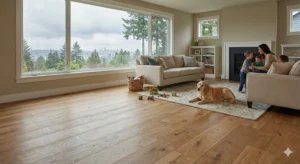
Design flexibility stands out. Modern luxury vinyl plank flooring replicates everything from reclaimed barn wood to Italian marble, letting you match your brand aesthetic without maintenance headaches. A tech startup in South Lake Union can achieve that industrial look with gray-toned LVP mimicking polished concrete, while a dental office in Issaquah can choose warm wood tones that put patients at ease.
Installation speed matters when you’re paying rent on empty space. LVT typically installs in 2-3 days for a standard office suite, versus a week or more for traditional tile. Click-lock systems used in most commercial-grade LVP mean no messy adhesives, no cure time, and you can move furniture in as soon as the last plank clicks into place.
Cost-effectiveness shows up both upfront and long-term. Quality luxury vinyl tile runs $4-8 per square foot installed: less than hardwood, comparable to good laminate, but with superior durability. Properly installed LVP flooring in a moderate-traffic office lasts 15-20 years without refinishing. Compare that to carpet requiring replacement every 7-10 years.
For Seattle’s climate specifically, LVP’s moisture resistance prevents the expansion and contraction issues that plague hardwood during humid winters and dry summers. Buildings without perfect climate control (common in older structures throughout Georgetown, Ballard, and the U-District) won’t cause your flooring to buckle or gap.

Vinyl flooring solutions for every budget
Beyond premium LVP, standard vinyl flooring offers solid performance for budget-conscious tenant improvements. This type of flooring functions well for back-of-house areas, storage rooms, or any space where appearance takes second place to functionality and easy cleaning. A restaurant kitchen in Wallingford or warehouse office in Kent benefits from vinyl’s durability without needing the upscale appearance of plank formats, making it an effective way to handle high-use areas economically.
Vinyl composition tile (VCT) remains popular in industrial settings, schools, and healthcare facilities. While it requires periodic stripping and waxing to maintain appearance, VCT handles heavy equipment, rolling carts, and constant foot traffic better than most alternatives. Manufacturing facilities in Renton and distribution centers in Auburn frequently specify VCT for office areas adjacent to warehouse space.
Cost differences matter when operating within a fixed TI allowance. Basic sheet vinyl starts around $2-3 per square foot installed, while VCT runs $2-4. The tradeoff comes in appearance and perceived quality: these aren’t choices for customer-facing spaces in upscale neighborhoods, but they’re practical solutions for functional areas.
Laminate flooring for cost-conscious projects
Laminate flooring fills a specific niche in commercial tenant improvements: spaces needing better appearance than basic vinyl but unable to justify LVT pricing. Laminate functions in moderate-traffic environments like professional offices, boutique retail, or co-working spaces in neighborhoods like Greenwood or Maple Leaf.
The limitation is moisture sensitivity. Unlike LVT, laminate has a wood fiber core that swells when wet. This makes it unsuitable for restaurants, medical offices, or any space where spills happen regularly. For a law office in Federal Way or accounting firm in Lynnwood, laminate delivers professional appearance at $3-6 per square foot installed.
Durability in commercial settings depends on wear layer thickness. Residential-grade laminate won’t survive commercial use. You need AC4 or AC5 rated products with wear layers thick enough to resist scratching from chairs, carts, and daily traffic. Expect 10-15 years of life in typical office environments before the surface shows wear.
Epoxy flooring for industrial and warehouse spaces
Epoxy flooring dominates warehouses, commercial garages, and light manufacturing facilities throughout Kent, Auburn, and Sumner. The seamless surface handles heavy loads, resists chemicals and oils, and cleans with a mop and bucket. For warehouse offices converting ground-floor space in Tukwila or auto service shops upgrading customer areas in Burien, this type of flooring provides industrial-tough solutions that meet code requirements (securing proper permission from landlords before installation) while still looking professional.
Application requires 3-5 days for proper surface prep, coating application, and cure time. Temperature and humidity affect cure rates; installers in the Seattle area typically avoid application during our coldest, dampest winter months. Once cured, epoxy can last 20+ years even under heavy use.
Cost runs $5-12 per square foot depending on coating thickness and decorative options like colored flakes or metallic finishes. The upfront investment pays back through minimal maintenance and exceptional longevity.
Sustainable choices: Linoleum flooring
True linoleum (made from linseed oil, cork dust, and wood flour) appeals to environmentally conscious businesses throughout the Pacific Northwest. Seattle’s strong sustainability culture makes linoleum a natural fit for companies wanting to emphasize green credentials. Coffee roasters in Georgetown, yoga studios in Fremont, and eco-focused retail shops in Ballard often choose linoleum for its renewable materials and biodegradability.
Performance-wise, linoleum handles moderate foot traffic and resists bacteria naturally. It costs $4-8 per square foot installed, comparable to mid-range LVT. The distinctive appearance (slightly warmer and less plastic-looking than vinyl) meshes with certain brand aesthetics while feeling wrong for others.
Maintenance requires pH-neutral cleaners and occasional resealing. Linoleum isn’t the lowest-maintenance choice, but for businesses where sustainability matters to their customer base, it delivers both functional flooring and brand alignment.
Tile flooring for specialized commercial needs
Porcelain and ceramic tile serve specific niches in commercial tenant improvements. Durability exceeds almost everything else: properly installed porcelain tile floors in office lobbies or retail entrances will outlast the lease term, the next lease term, and probably the one after. Tile handles Seattle’s wet winters without issues, making it ideal for entryways, bathrooms, and commercial kitchens.
Installation costs more in both materials and labor. Porcelain tile materials run $2-15 per square foot depending on quality and size, with professional installation adding $4-15 per square foot. The total installed cost typically ranges from $12-25 per square foot for commercial applications. Tile construction requires skilled installers and takes longer than floating floor systems. But in high-traffic areas like building lobbies, elevator banks, or restaurant dining rooms, tile’s longevity justifies the investment.
Porcelain tile functions in lobbies, reception areas, and hallways where you need something that can take punishment without showing wear. Large-format tiles (12″×24″ or bigger) create modern, upscale looks popular in downtown Seattle office buildings.
Mosaic tile adds visual interest in smaller doses. This type of decorative element works well in reception desk surrounds, feature walls, or bathroom accents to reinforce brand identity through color and pattern. A boutique hotel in Belltown or a design firm in Pioneer Square might use custom mosaic elements as a signature feature that clients remember from their first visit, making it easier for satisfied customers to contact you with referrals.

Specialized remodeling services for tenant improvements
Kitchen remodeling for commercial breakrooms
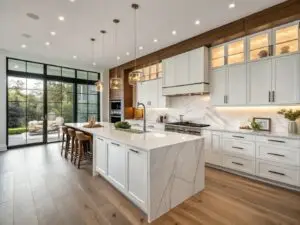
Employee breakroom and kitchenette upgrades frequently accompany office tenant improvements. When you’re competing for talent in Seattle’s market, workplace amenities matter. A well-designed breakroom with quality flooring signals that you value your team.
Flooring in commercial kitchen areas needs to be waterproof, easy to clean, and slip-resistant when wet. LVT with textured surfaces functions well, as does commercial-grade vinyl. Tile offers maximum durability but costs more upfront. BYM Construction typically recommends LVT for most office breakrooms: it balances cost, performance, and appearance better than alternatives.
Bathroom remodeling for ADA compliance
Commercial restroom upgrades often trigger ADA compliance requirements, particularly in older buildings throughout downtown Seattle, the U-District, and Capitol Hill. Accessible bathroom design includes grab bars, proper fixture heights, and adequate turning radius, but flooring matters too. All improvements must comply with local building codes and any relevant regulations, such as the Americans with Disabilities Act (ADA).
Non-slip flooring is essential. Porcelain tile with textured surfaces or slip-resistant vinyl protects against liability while meeting code requirements. Colors and patterns should hide dirt without looking institutional: neutral grays, taupes, and earth tones function well in most commercial settings.
Collaborating with a bathroom remodeling contractor experienced in commercial ADA requirements prevents costly do-overs. Seattle’s permitting process scrutinizes accessibility compliance, and failing inspection means delays and extra expense.
Basement remodeling for below-grade commercial spaces
Seattle’s hilly terrain and older building stock mean many commercial spaces include basement or below-grade areas. Converting these spaces into usable offices, storage, or employee areas requires careful moisture management. Our high water table and frequent rain make basements vulnerable to dampness and potential flooding.
Flooring choices for basement remodeling must account for potential moisture from below. Epoxy coatings over concrete function well for utility areas. For office space, LVT installed over proper moisture barriers provides professional appearance without the mold risk of carpet or moisture sensitivity of laminate.
Before finishing any below-grade space, proper waterproofing and drainage are essential. Cutting corners leads to ruined flooring and potential mold problems that can close your business for remediation.
Working with a remodeling contractor
A qualified remodeling contractor coordinates the various trades involved in tenant improvements: flooring installers, electricians, plumbers, HVAC technicians. They keep your buildout on schedule. For interior remodeling contractor efforts in Seattle, experience with local building codes and permit processes matters as much as construction skill.
Typical tenant improvement remodeling services include project planning, permit applications, demolition, construction, and final inspection coordination. Professional assistance from a commercial real estate attorney or broker can enhance negotiations for tenant improvements. A good contractor protects you from surprises by thoroughly assessing existing conditions before quoting the job. That 1960s office building in Renton might have asbestos tile needing abatement before new flooring goes down: something you want to understand before signing a lease.
Project timelines vary, but most medium-sized office tenant improvements take 6-12 weeks from permit application to move-in. Flooring installation typically happens toward the end, after drywall dust settles and painting finishes. Rushing this sequence leads to damaged floors and rework.

Why choose BYM Construction for your Seattle tenant improvements
BYM Construction brings 25+ years of experience to commercial flooring and tenant improvement projects throughout the greater Seattle area. Our teams maintain regular schedules in King, Pierce, and Snohomish counties, giving us familiarity with local permit requirements, inspectors, and building characteristics that vary by neighborhood.
We understand Pacific Northwest construction challenges: managing moisture in Seattle’s climate, sourcing materials locally to reduce delays. Our relationships with suppliers in Kent and Tacoma mean we can access quality flooring products quickly, even when supply chains tighten.
Every project gets assigned a dedicated manager who coordinates scheduling, communicates progress, and solves problems before they become delays. When you’re paying rent on empty space, timeline predictability matters. We meet our deadlines or we explain why we can’t. No surprises.
Our general contractor services in Auburn and throughout South King County have included everything from small office suites to 50,000-square-foot retail spaces. We’ve handled tenant improvements in historic Pioneer Square buildings, modern South Lake Union towers, and converted warehouse spaces in Georgetown.
As a Pacific Northwest commercial remodeling company, we prioritize sustainable practices when clients request them: low-VOC materials, recycling construction waste, sourcing locally manufactured products. For businesses in Des Moines seeking experienced general contractors, we bring the same attention to detail and timeline management that’s made us trusted throughout the region. For Seattle Metropolitan Area businesses where environmental responsibility matters to employees and customers, we can deliver green building approaches without lecturing or adding unnecessary cost.
Getting your tenant improvement right
Flooring anchors your commercial space. It’s the literal foundation employees and customers experience every day. Choosing the right materials for Seattle’s climate, your specific use case, and your budget requires balancing multiple factors. Luxury vinyl plank flooring serves most applications, but specialty spaces need specialty solutions.
Collaborate with contractors who understand Seattle’s building stock, comprehend moisture management in our climate, and maintain relationships with local inspectors and suppliers. Cutting costs on flooring rarely saves money long-term: cheap materials fail faster, requiring mid-lease replacement.
Plan thoroughly before construction starts. Understand your lease terms, clarify the TI allowance, and obtain multiple bids from qualified contractors. Negotiating a TI often involves providing a detailed project budget and scope of work prior to discussions with the landlord. A few extra weeks in planning prevents months of hassle and expense during construction. Take time to visit completed projects and meet with potential contractors to find the right fit for your needs.
BYM Construction offers free consultations for commercial tenant improvement projects throughout the Seattle metro area. We’ll assess your space, discuss your needs, and provide realistic timelines and budgets. Contact us to start planning your buildout and discover how our experience can help you avoid common pitfalls while delivering a space that serves your business goals.