
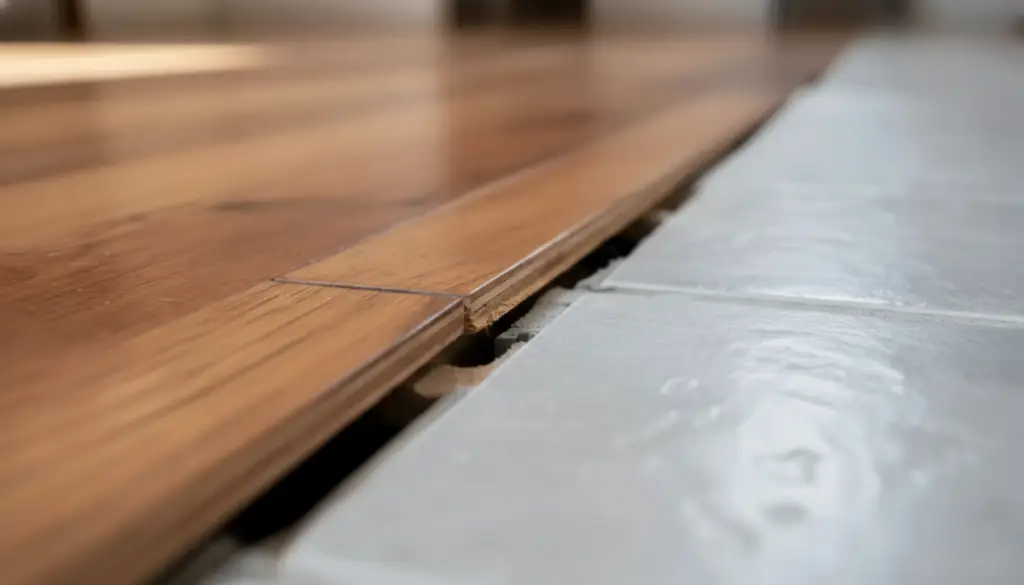
Flooring mistakes are far more common than many Seattle homeowners expect. Even a well-funded renovation can feel unfinished when a single detail is overlooked. At BYM Construction, our team has completed over 2,000 flooring and remodeling projects across the Pacific Northwest since 2002, and we see the same avoidable issues appear again and again. The good news is that these problems are not inevitable. With proper planning and execution, each one can be prevented, even as flooring trends keep evolving toward neutral palettes, natural textures, and matte finishes that add warmth, personality, and everyday beauty to Seattle homes for modern families. Top flooring choices in Seattle include warm natural wood tones, wide-plank engineered hardwood, matte finishes, and waterproof LVP. Engineered hardwood in Seattle features wider planks and lighter wood stains for stability in humid climates.
1. Wrong Transition Strips Between Rooms
Few details undermine a flooring project faster than visible aluminum transition strips separating rooms with different floor finishes. We pull up these generic metal transitions weekly from homes across Queen Anne and Capitol Hill, where they often cut awkwardly across walls, furniture groupings, and carefully planned flooring patterns. These generic solutions often chip within months, create noticeable height differences, and visually read as an afterthought rather than a design decision, especially when they slice through gray shade transitions and break up an otherwise consistent style.
The correct solution is to use species-matched wood reducers or custom-milled thresholds that integrate seamlessly with the surrounding flooring, supporting the overall style, texture, and cozy flow of the space instead of drawing the eye like a mistake. While these options typically cost more than basic metal strips, the difference is justified by longevity and appearance. They can last 20+ years and create a classic, almost timeless sense of continuity that makes a house feel intentional and well planned. T-molding works great between rooms of equal height. Flush reducers handle those tricky spots where luxury vinyl plank meets ceramic tile or stone, and they work especially well next to herringbone or straight-lay installation patterns in adjoining rooms.

2. Ignoring Subfloor Problems
We have worked with homeowners in Ballard who installed wide-plank oak flooring over subfloors that were never properly evaluated. Six months later? Squeaks in every room and visible bumps that made the whole space look warped. Based on our experience, inadequate subfloor preparation accounts for a significant portion of premature flooring failures.
Proper preparation requires leveling the subfloor to within 3/16 of an inch over a 10-foot span, often grinding or sanding down rough areas so each layer of the floor system stays stable over time.¹ It means moisture testing below 12 percent before any wood or laminate goes down. Seattle’s humidity hovers around 70 to 80 percent annually, which demands a 6-mil vapor barrier underneath most installations and, in some cases, additional moisture control over concrete or stone subfloors.²
Waterproof Luxury Vinyl Plank (LVP) and laminate are ideal for Seattle’s wet climate and serve high-traffic areas. Porcelain and ceramic tiles are nearly waterproof and commonly used in high-moisture areas such as kitchens and bathrooms in Seattle. Those squeaks you hear? Usually, it is loose plywood that needs 8d nails every 6 to 8 inches along the joists.. Skip this step, and you’re literally building problems into your floor instead of creating a durable surface you can realistically maintain over decades.
3. Choosing Flooring Based on Price Alone
Low-cost laminate flooring may look appealing at first, but in Seattle’s climate, it often begins to fail after just a few wet seasons. We see this pattern constantly in first-time buyer homes. The previous owner grabbed whatever was affordable at the big box store or an online store, and now the new homeowner inherits warped floors and visible seams.
A more accurate way to evaluate flooring is to consider long-term cost rather than upfront pricing alone and ask whether the material feels practical, fits your sense of style, and can stand up to your household’s real traffic patterns. Luxury vinyl plank (LVP) offers the beauty of natural wood without the maintenance headaches. Choosing flooring that is easy to maintain is essential for busy households. Flooring must meet the needs of the homeowner’s lifestyle, including quality and ease of cleaning. Builder-grade laminate at $1 to $2 per square foot lasts maybe 5 years in our climate, especially once everyday wear and scratch marks from pets and kids begin to show. Quality luxury vinyl plank at $4 to $6 per square foot carries a 25-year warranty, and some homeowners mix in cork, carpet, or reclaimed wood in living areas for extra warmth, sound control, and other added benefits. That’s $0.20 per year versus $0.40 per year for something that actually looks good. In a market where home values regularly exceed several hundred thousand dollars, worn or mismatched flooring can noticeably reduce perceived value during resale. The math favors durability every time.
4. DIY Installation Without Proper Acclimation to Local Flooring Trends and Climate Conditions

Wood and laminate flooring must acclimate inside the home for a sufficient period before installation, typically ranging from several days to two weeks, depending on the material and conditions.³
This lets the material adjust to your specific humidity levels, which in Seattle homes typically run 8 to 12 percent moisture content. Skip this step, and you’re creating expansion problems before the first plank is locked in place.
We’ve torn out floors where gaps of 1/8 to 1/4 inch opened up between every board. The homeowner installed it right out of the box on a dry summer weekend. Then fall rains hit, and the wood swelled with nowhere to go. Buckling followed. The entire floor needed replacement. Any initial savings from a rushed installation are often lost when corrective work becomes necessary. Our Pacific Northwest climate, with 150+ rainy days per year, makes acclimation non-negotiable.⁴
5. Mismatched Flooring Choices That Disrupt Interior Design and Gray Floor Palettes
Moving from vinyl in the kitchen to carpeted hallways and laminate bedrooms often creates visual fragmentation. This “patchwork” effect can make even high-quality materials feel disjointed and unrefined. Those mid-century ranches in Fremont? Many suffer from decades of room-by-room updates that never considered the whole house, so floors, walls, and paint colors all tell different stories instead of working together.
Stick to 2 to 3 materials maximum throughout your home. Wide planks in consistent 7 to 9 inch widths create flow between spaces. Luxury vinyl plank mimicking honey oak can unify an open concept layout while handling the practicality needs of kitchens and bathrooms. Hard surfaces in main living areas with wall to wall carpeting or area carpet in bedrooms work beautifully when the tones coordinate, the texture feels comfortable underfoot, and the overall trends in your home lean toward neutral, versatile finishes. If you love marble or quartz in the kitchen, stone or porcelain tile in the entry, and sustainable touches like reclaimed wood details, treat those choices as part of a single, timeless design rather than separate projects.
Large-format tiles with minimal grout lines are trending in bathrooms and laundry rooms for easier cleaning, and large-format porcelain tiles are increasingly popular for kitchens and bathrooms in Seattle. Bold patterned tiles such as hexagons, chevrons, and herringbone patterns are featured in Seattle bathrooms and kitchens as accents rather than competing focal points.
Warm wood tones are making a comeback, with golden honey hues, rich chestnuts, and natural oaks gaining popularity over cooler gray floors. Textured and matte finishes are preferred over glossy floors, with options like wire-brushed planks and hand-scraped woods helping hide everyday wear. Sustainable materials like bamboo, cork, and reclaimed wood are also gaining popularity in Seattle flooring trends. The goal is intentional design, not random choices that happened over many years.
How to Fix Flooring Disasters Before They Happen

Nearly every flooring issue discussed above stems from one underlying problem: rushing critical decisions and installation steps. Getting the subfloor right takes time. Letting materials acclimate takes time. Choosing quality over cheap takes research. Planning transitions between rooms takes forethought.
Our recommendation is straightforward: before purchasing materials, have a professional assess your subfloor condition, test moisture levels, and plan transitions between flooring types. The consultation costs far less than redoing a botched installation. Sustainable materials like cork, natural stone, and responsibly sourced hardwoods are increasingly favored in modern flooring trends. Eco-friendly materials like cork and bamboo are in high demand among Seattle residents for their comfort and sustainability. Homeowners who invest in proper planning end up with floors that still look stunning after 20 years. Those who skip steps end up calling contractors like us to fix what went wrong.
If you are planning a flooring project in the Seattle area, our team can provide a clear, professional assessment of your space before work begins.
Frequently Asked Questions
1. What are the most common flooring mistakes homeowners should avoid?
Common mistakes include using the wrong transition strips, neglecting subfloor preparation, choosing flooring based on price alone, skipping acclimation, and mismatched flooring throughout the home.
2. Why is subfloor preparation important?
Proper subfloor prep ensures a level, moisture-safe surface that prevents squeaks, bumps, and premature flooring failure, especially in Seattle’s humid climate.
3. How does acclimation affect flooring installation?
Acclimation allows wood and laminate flooring to adjust to the home’s humidity, preventing gaps, buckling, and other issues caused by moisture changes.
4. What flooring materials are best suited for Seattle’s climate?
Durable and moisture-resistant materials like luxury vinyl plank, engineered hardwood with wide planks, and ceramic or porcelain tiles are ideal for Seattle’s wet environment.
5. How can I create a cohesive look with different flooring types?
Limit your home to 2-3 complementary flooring materials and coordinate tones and plank widths to ensure smooth transitions and visual flow.
6. Are cheaper flooring options worth the savings?
While upfront costs may be lower, cheaper flooring often lacks durability and may need replacement sooner, costing more in the long run.
7. How can I avoid flooring disasters before starting my project?
Plan carefully by assessing subfloors, testing moisture levels, choosing quality materials, allowing acclimation time, and selecting proper transition strips to ensure lasting results.